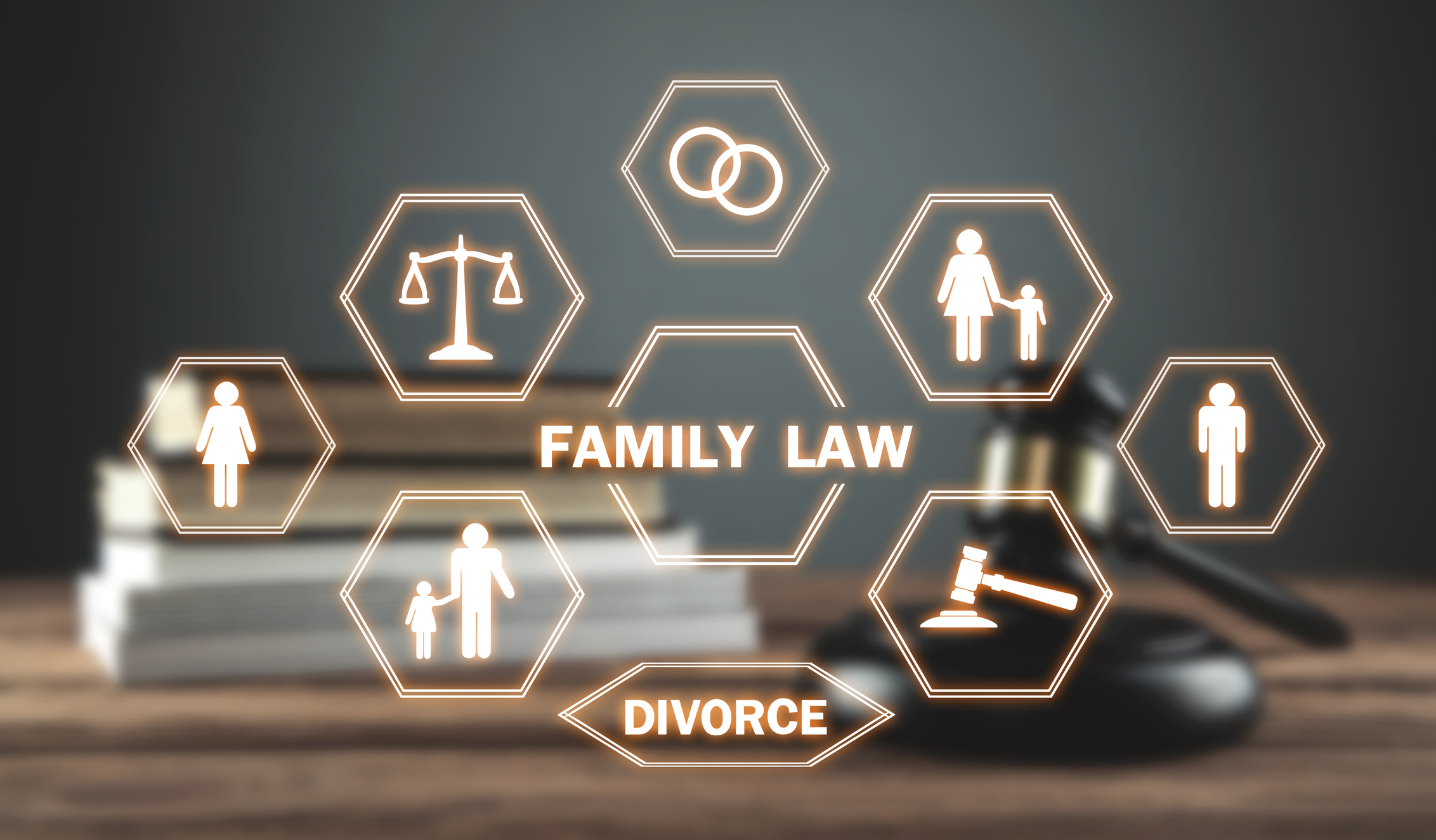
Family law is a legal practice area that deals with issues involving family relationships, such as marriage, divorce, child custody, and adoption. It encompasses a broad range of topics, each of which plays a critical role in the lives of individuals and families.
Marriage and Civil Unions
1. Legal Requirements for Marriage
Marriage laws vary by jurisdiction, but generally, they require that the parties be of legal age, not closely related by blood, and have the capacity to consent. Some jurisdictions also require premarital counseling or medical examinations.
2. Prenuptial Agreements
A prenuptial agreement is a contract entered into before marriage that outlines the division of assets and spousal support in the event of a divorce. These agreements can protect individual property and clarify financial responsibilities.
Divorce and Separation
1. Grounds for Divorce
Divorce laws specify the acceptable grounds for ending a marriage. These can include irreconcilable differences, adultery, abandonment, and cruelty. In no-fault divorces, couples do not need to prove wrongdoing to obtain a divorce.
2. Legal Separation
Legal separation allows couples to live apart while remaining legally married. During this time, they can settle issues like property division, child custody, and spousal support. Some couples choose legal separation instead of divorce for religious or personal reasons.
3. Division of Assets
In a divorce, marital property is divided between the spouses. The division can be equitable (fair but not necessarily equal) or equal, depending on the jurisdiction. Courts consider factors like the length of the marriage, the financial contributions of each spouse, and their economic needs.
Child Custody and Support
1. Types of Custody
Custody arrangements can be classified as legal custody (decision-making authority), physical custody (where the child lives), and joint custody (shared responsibilities). Courts typically prioritize the child's best interests when determining custody arrangements.
2. Child Support
Child support is the financial contribution from the non-custodial parent to the custodial parent to help cover the costs of raising the child. The amount is usually determined by guidelines that consider the parents' income, the child's needs, and other factors.
Adoption and Guardianship
1. Adoption Process
Adoption legally transfers parental rights from the biological parents to the adoptive parents. The process involves background checks, home studies, and court approval. Different types of adoption include open, closed, and international adoption.
2. Guardianship
Guardianship is a legal arrangement where a person is appointed to care for a minor or an adult who is unable to manage their affairs. Guardians have the authority to make decisions about the ward's health, education, and welfare.
Domestic Violence and Protective Orders
1. Understanding Domestic Violence
Domestic violence includes physical, emotional, and psychological abuse within a domestic setting. It can occur between spouses, partners, or other family members. Victims have legal avenues for protection, such as restraining orders.
2. Obtaining a Protective Order
A protective order (also known as a restraining order) is a legal order issued by a court to protect a person from abuse or harassment. Violating a protective order can result in criminal charges.
Conclusion
Family law is a complex and sensitive area of law that directly impacts the lives of individuals and families. Understanding the basic principles and procedures can help individuals navigate legal challenges related to marriage, divorce, child custody, and more.
Note: This post has only one author, no quotes, an embedded image after the first paragraph, the featured image (Getty), some subheadings , tags: insight, family law.

/Passle/66cdbf51e431c50f29449603/SearchServiceImages/2024-08-27-13-04-46-210-66cdceeee431c50f2944cb63.jpg)
/Passle/66cdbf51e431c50f29449603/SearchServiceImages/2024-08-27-12-57-55-307-66cdcd53b528881b9faf90d4.jpg)